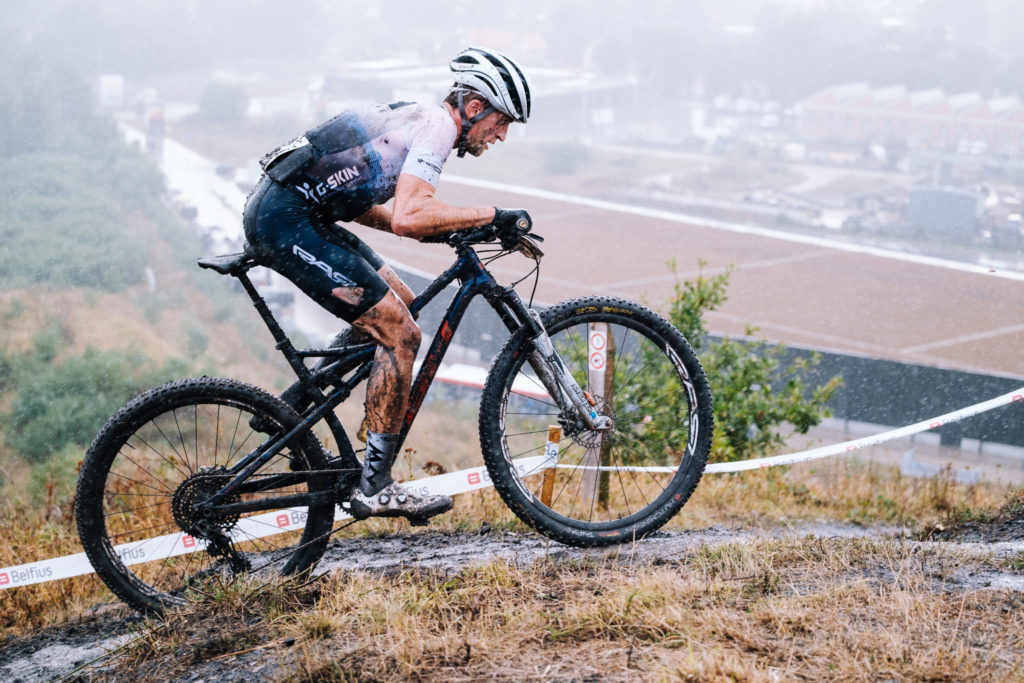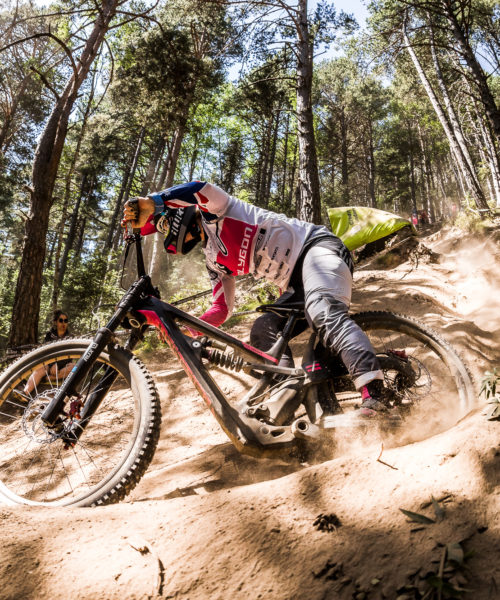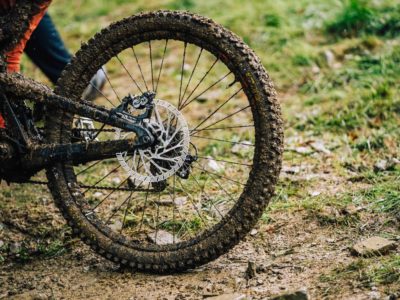
When we talk about e-Bike and wet conditions, we are talking about one of the most demanding scenarios for the braking system.
More weight.
More inertia.
Longer braking time on extended descents.
And variable conditions: rain, mud, constant humidity.
In this context, not all brake pads behave the same.
Why wet braking is critical on an e-Bike
On an e-MTB, the braking system operates under higher load than on a conventional bicycle:
- Greater total mass (bike + battery + rider)
- More energy to dissipate with every braking action
- Frequent use on technical descents
- Mixed conditions (water + dirt + mud)
- Slippery ground, requiring greater control
In wet conditions, the key is not just maximum power, but the ability to maintain consistent and controllable friction throughout the entire ride.
Which compound performs best in wet conditions for e-Bike
Within the galfer bike range, there are clear differences depending on intended use.
? G1851 Advanced – Use in extreme and muddy conditions
The red G1851 Advanced pads are specifically developed for:
- Wet and muddy conditions
- Intensive mountain use
- The need for consistent bite on variable terrain
Their performance stands out for:
- Fast bedding-in process to reach full performance
- Good stability on prolonged descents
- Balance between power, control and durability
In frequent rain or technical muddy routes, this compound is designed to maintain consistency.
? G1652 E-Bike – Specifically developed for electric bikes
The G1652 pads are developed for e-Bikes and are ECE R90 approved.
Designed for:
- Higher weight and thermal demand
- Prolonged use
- Increased pad durability
They offer:
- Progressive braking power
- Stable thermal control
- Reliable response in mixed conditions (dry and wet)
Real wet comparison: Galfer vs other brands
In real e-MTB use in rain or mud, differences typically appear in four key areas:
- Initial bite with a wet disc
All brake pads require a bedding-in process with the disc. Through controlled mutual wear, both surfaces adapt and reach full performance potential.
With a high-quality compound, optimal performance is achieved sooner.
The G1851 Advanced compound reaches its performance potential with minimal bedding-in.
- Consistency on long descents
In the presence of water, braking dynamics change. As water evaporates, it absorbs heat, contributing to cooling. However, it also alters friction between disc and pad, and in some compounds may interfere chemically or act as a lubricant. Thanks to its metallic components, the Advanced compound maintains stable friction in these adverse conditions.
- Wear resistance in mud
Mud is abrasive.
A compound that is too soft may degrade quickly. The balance between friction and durability is essential.
- Control and sense of security
Water can act as a lubricant depending on the type of mud and terrain. At minimum, it alters friction between pad and disc. The Galfer Advanced compound, thanks to its metallic particles, maintains friction even in the presence of mud.
On an e-Bike, confidence comes from repetition: the same response, corner after corner.
It’s not only about the pad
For an honest comparison, it’s important to remember that wet performance also depends on:
- Disc type
- Disc diameter
- Brake system (caliper and lever)
- System maintenance
The pad is decisive, but it is part of a complete system.
Which pad to choose for wet e-Bike riding?
- Frequent muddy or heavy rain routes → G1851 Advanced (red)
- Mixed e-Bike use → G1652 specific e-Bike
- Mainly dry use → G1053 Performance (black)
Conclusion
On an e-Bike, braking well in wet conditions is not about marketing — it’s about consistency.
The red G1851 Advanced pads are clearly oriented toward wet and muddy conditions, while the G1652 offer a specific balance for electric bicycles.
The right choice is not the most aggressive one, but the one that best matches the rider’s real-world use.
To get the most out of your braking system in muddy conditions, it is recommended to use discs with sufficiently large windows to prevent mud accumulation and allow the edges to clean the pad surface. That is why we recommend Wave discs.